
Lead Scoring Models
Lead scoring ranks incoming leads by how likely they are to close, so your best closer's time flows to the right ones. Here's how to build a rule-based model from your own won and lost deals — no data team required.


For a service business, the constraint on growth is rarely lead volume. It's the calendar of whoever actually closes — often the owner, sometimes one or two senior people. Every hour they spend on a tire-kicker is an hour stolen from a lead that would have signed. A lead scoring model is the system that keeps that from happening: it ranks incoming leads by how likely they are to become paying customers, so your closing time flows to the leads that deserve it.
Most lead scoring content is written for enterprise B2B teams with a full marketing automation stack and thousands of leads a month. That advice doesn't transfer cleanly to a business booking 40 quotes a week. This is a scoring guide for operators who need a model they can build this month, run without a data team, and trust enough to change how they spend their time.
What Is a Lead Scoring Model?
A lead scoring model assigns a numeric value to each lead based on two things: how well they fit your ideal customer, and how strongly they're signaling intent to buy. Add the signals, get a score, and the score tells your team who to call first.
How it works in practice. You define a set of attributes and behaviors that correlate with closing — company size, service requested, how they found you, whether they asked about pricing, how fast they replied. Each gets a point value. A lead that requested a quote for your highest-margin service and replied within an hour scores high. A lead that downloaded a free guide and gave a personal Gmail address scores low. The score is a proxy for how much of your team's time this lead is worth.
Why businesses use it. Without scoring, leads get worked in the order they arrive, or in the order that's loudest. Both are bad prioritization. Scoring replaces gut-feel triage with a repeatable rule — which matters most exactly when you're growing and the person who used to eyeball every lead can no longer keep up.
The data behind a score falls into a few buckets: demographic (who the person is), firmographic (what their company is, for B2B), behavioral (what they've done — pages viewed, emails opened, forms filled), and intent (signals they're actively evaluating a purchase). More on these below.
Lead qualification vs. lead scoring
These get used interchangeably and shouldn't be. Qualification is a yes/no gate — does this lead meet the minimum criteria to be worth any sales time at all (right service area, real budget, a genuine need)? Scoring is the ranking that happens after the gate — among the leads worth pursuing, who's worth pursuing first? BANT — budget, authority, need, timeline — is a qualification framework, originally built at IBM as a fast first filter for whether a prospect is worth a rep's time. A point-based model is a scoring tool. You need both: qualification removes the unworkable leads, scoring sequences the rest.
Where sales and marketing alignment comes in
A scoring model only works if the people generating leads and the people closing them agree on what a good lead looks like. When marketing calls a lead qualified and sales calls the same lead a waste of time, the score is fiction. The fix isn't a better algorithm — it's a shared definition, validated against which leads actually closed. A scoring model is, in effect, that agreement written down as math.
Types of Lead Scoring Models
Six approaches show up in practice. Most real models blend several.
- Demographic scoring ranks on personal attributes: job title, role, seniority. Useful when you sell to a specific decision-maker (e.g., a bookkeeping service targeting founders, not office managers).
- Firmographic scoring (B2B) ranks on company traits: size, revenue, industry, location. This is where you encode a fit for 10–50 employee companies in metro Atlanta, and score down anyone outside it.
- Behavioral scoring ranks on actions: pages visited, emails opened, quote forms started, pricing page views. Behavior is usually the strongest predictor of intent, because it's what someone does, not what they claim.
- Intent-based scoring is a sharper subset of behavioral — it weights the specific actions that signal active buying: requesting a quote, asking about availability, replying with a timeline.
- Predictive scoring uses machine learning to find patterns in your historical data and score leads automatically. Powerful at volume, impractical below it (covered in depth later).
- Hybrid scoring combines fit attributes (demographic/firmographic) with behavior and intent. This is what most effective models actually are — and what you should build.
The takeaway: don't pick one type. Pick the fit signals and the intent signals that matter for your business, and combine them.

How to Build a Lead Scoring Model
Here's where most SMBs go wrong: they copy a scoring template from a software vendor's blog, assign point values by gut feel, and end up with a model that looks sophisticated and predicts nothing. The fix is to build the model backward — from deals you've already won and lost — instead of forward from theory.
The Backward Scorecard
A five-step method for building a scoring model from your own data, without a data scientist:
- 1. Pull your last 20–50 closed deals — both won and lost. Fewer than 20 and the pattern is noise; you don't need thousands.
- 2. Find the 3–5 attributes that actually separated winners from losers. Look for traits the closed-won leads shared that the lost ones didn't: the service they asked for, how they found you, whether they gave a phone number, how fast they responded. You're hunting for real signal, not building a complete profile.
- 3. Weight by separating power, not by gut feel. If 80% of your won deals came from referrals and only 20% of lost ones did, referral source is a heavy positive. If job title barely differed between won and lost, it's near-zero — even if every template says to score it.
- 4. Set the threshold where sales should stop. The score itself is meaningless; the cutoff is the decision. Set it at the point below which leads almost never closed, and agree that leads under it get a lighter touch — a nurture email, not a same-day call.
- 5. Re-fit quarterly. Your best lead sources and highest-margin services shift as you grow. A model built once and never revisited slowly drifts from reality.
The reason this works: it forces every point value to earn its place against evidence. A template gives you someone else's correlations. The Backward Scorecard gives you yours — the same logic predictive scoring engines use when they learn which attributes separated your closed-won from your closed-lost deals, except you can read and edit it.

Lead Scoring Model Examples
Service business (primary). A home-services company scores on: service requested (emergency repair +30, routine maintenance +10), source (referral +25, paid search +10, free-guide download 0), response to first contact (replied within one hour +20), and geography (in primary service area +15, outside −20). A lead at 60+ gets an immediate call; 30–59 gets same-day follow-up; under 30 goes to an email sequence. The owner's time now flows to the emergency, in-area, referral leads — the jobs that both close and pay. That response-time weighting isn't arbitrary: research on inbound leads has long shown that contacting a lead within the first hour dramatically raises the odds of qualifying it versus waiting even a day, which is exactly why a fast reply is a high-value scoring signal.
B2B SaaS. Scores fit (company size, industry, role) plus product behavior (signed up for trial +25, invited a teammate +20, hit a usage milestone +30). Behavior inside the product is the dominant signal because it's hard to fake and closely tied to conversion.
E-commerce. Scores on-site behavior and purchase intent: added to cart, viewed pricing or returns pages, repeat visits, email engagement — used to trigger timely offers rather than to route to a salesperson.
Enterprise. Heavier on firmographic fit and account-level signals across a buying committee, usually with predictive scoring layered on because deal volume and data support it.
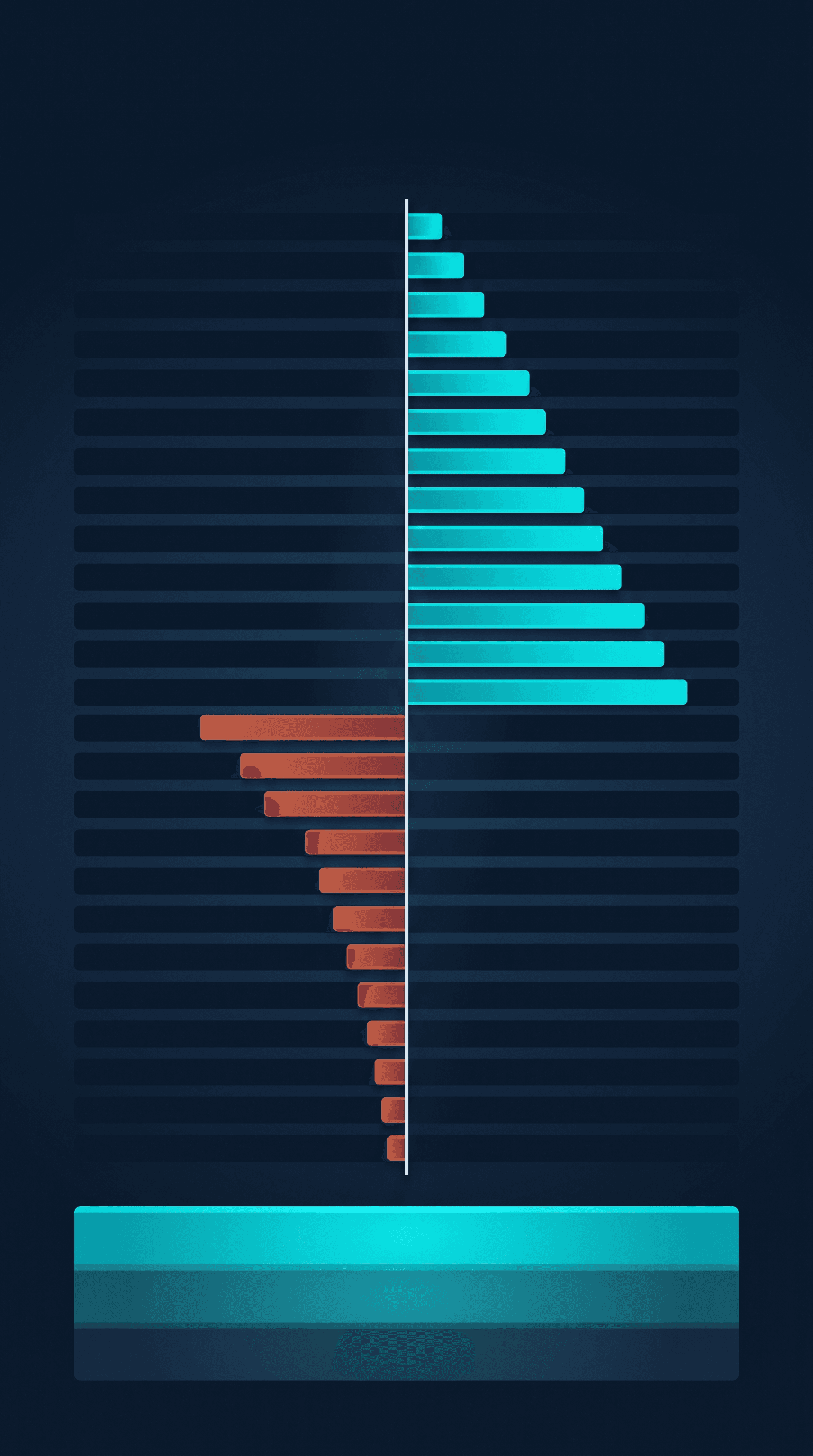
A sample lead scoring matrix
- Requested a quote — +30
- Referral source — +25
- Replied within one hour — +20
- In primary service area — +15
- Highest-margin service — +15
- Free content download only — +5
- Outside service area — −20
- Personal email + no phone — −10
- Job seeker / competitor / spam pattern — −30
Thresholds: 60+ hot (call now), 30–59 warm (same-day), under 30 nurture. Adjust the numbers to your own closed-deal data — the structure matters more than the specific points.
Lead Scoring Criteria and Factors
Group every scoring factor into two questions: is this the right customer (fit)? and are they ready to buy (intent)? Fit without intent is a good lead who isn't ready; intent without fit is an eager lead who'll never be profitable. You want both.
Fit signals — job title and role, company size, industry, location and service area. These are stable and known early.
Intent signals — website behavior (pricing and service pages carry far more weight than a blog visit), email engagement, content downloads (weak — information-gathering, not buying), and the strong ones: demo or quote requests, availability questions, fast responses.
Negative scoring is the most underused lever. Subtract points for signals that predict a non-sale: out-of-area, personal email with no phone number, roles that indicate a job seeker or competitor, a free-tool download with no further action. Negative scoring is what stops a lead from looking hot just because they were busy — someone who opens every email but sits outside your service area should not outrank a referral who opened nothing.

Predictive vs. Rule-Based Lead Scoring
This is the decision most SMB content gets backward, so be clear about it.
Rule-based scoring is the point system described throughout this article: you set the rules, you assign the weights, you can read and edit the model in a spreadsheet. It's transparent and instantly adjustable.
Predictive scoring uses machine learning to derive the weights from your historical data automatically. It analyzes patterns in your past customers and prospects to predict which current leads are most likely to close, finding correlations a human wouldn't and updating as data accumulates.
The trade-offs. Predictive scoring's advantage is finding non-obvious patterns at scale; its cost is that it needs a large volume of historical outcomes to train on, and it's a black box — with machine-learning scoring, it's not possible to see exactly how each input contributes to a lead's score, only how well the model predicts overall. Rule-based scoring's advantage is transparency and speed to build; its limit is that it only captures the patterns you already thought of.
When to use each. If you're a service business closing dozens to low-hundreds of deals a month, use rule-based. You don't have the data volume to train a reliable predictive model — the same vendors who sell predictive scoring acknowledge it needs a substantial base of clean historical conversions before its scores are trustworthy, which most SMBs simply don't have yet. And the transparency is worth more than the marginal accuracy. Predictive scoring earns its keep at high lead volume with a rich data history — which is why enterprise teams adopt it and most SMBs shouldn't, for now.
AI's real role for SMBs right now is less about full predictive scoring and more about enrichment and signal extraction: classifying inbound messages by intent, flagging urgency in a form submission, pulling firmographic data automatically. Those apply the leverage of AI without requiring the data volume predictive scoring demands.
Cost and implementation. Rule-based lives in tools you already pay for — your CRM, or a spreadsheet. Predictive scoring means either a platform with it built in (often a higher-tier plan) or a custom build: real cost, real setup, and no payoff until you have the data to feed it.

Best Practices for Lead Scoring Models
- Start from historical conversion data, not a template. (This is the Backward Scorecard — the single highest-leverage practice here.)
- Weight intent over demographics. What a lead does predicts closing better than who they are. The most common failure mode is a model dominated by fit attributes that scores an ideal-profile lead who's shown zero buying behavior above a perfect-fit lead who just requested a quote.
- Use negative scoring to actively push down the leads that waste time — don't only add points.
- Keep it simple. A model with eight well-chosen signals beats one with 40. Every extra factor adds noise and maintenance and rarely improves prediction.
- Validate against sales. After a few weeks, ask the closers: are the high-scoring leads actually better? If they laugh, the weights are wrong. Their feedback is your validation set.
- Monitor conversion by score band and adjust. If your warm tier closes as well as your hot tier, your thresholds are miscalibrated.
Common Lead Scoring Mistakes to Avoid
- Too many factors. Complexity feels rigorous and performs worse. More signals mean more ways to be wrong and more upkeep.
- Ignoring intent. A model built only on fit ranks leads who look right over leads who are ready. Buying signals have to carry real weight.
- Never updating the model. A scorecard is a snapshot of what worked when you built it. Left static, it decays as your mix of sources and services changes.
- Overweighting demographics. Title and company size are easy to score and often weakly predictive for service businesses. Don't let easy to measure masquerade as predictive.
- Building it without sales. If the people working the leads didn't help set the weights, they won't trust the score — and an ignored model is worse than none, because it created work and changed nothing.
- Not measuring performance. If you can't say whether high-scoring leads close better than low-scoring ones, you don't have a scoring model. You have a guess with numbers on it.
Lead Scoring Software and Tools
You don't need dedicated software to start — a spreadsheet and a shared definition beat a fancy tool nobody trusts. As volume grows, scoring belongs where your lead data already lives.
- CRM-based scoring. Most CRMs — HubSpot, Salesforce, Pipedrive, Zoho — include native lead scoring, both rule-based and, on higher tiers, predictive. This is the default for most SMBs: the scoring sits next to the contact record and the sales workflow, so scores actually get used.
- Marketing automation platforms add behavioral tracking — email, page views, form fills — feeding richer intent signals into the score.
- AI-powered / predictive solutions are worth evaluating only once you have the lead volume and data history to justify them.
What to look for: native CRM integration (a score that lives outside the CRM gets ignored), editable rules you can adjust without an engineer, negative scoring support, and clear visibility into why a lead scored what it did. The integration point matters most — the best model is worthless if it doesn't surface where your team already works.
Measuring the Success of a Lead Scoring Model
The model is a hypothesis: higher scores close at higher rates. Measure whether that's true.
- Conversion rate by score band is the core test. Hot leads should close meaningfully better than warm, warm better than cold. If the bands don't separate, the model isn't working.
- Sales acceptance rate — do the closers agree the high-scoring leads are worth their time? Low acceptance means marketing and sales still disagree on what good means.
- MQL and SQL flow — a marketing-qualified lead has engaged enough to be worth nurturing, while a sales-qualified lead has shown clear buying intent and is ready for direct sales contact. Your scoring threshold is the line between them. Track how many MQLs become SQLs; a low rate means your threshold is set too loose.
- Pipeline velocity — well-scored leads should move faster, because time goes to the leads most ready to buy.
- Revenue attribution — ultimately, do high-scoring leads generate more revenue per lead? That's the number that justifies the model.
Ongoing optimization: review score-band conversion quarterly, re-fit weights against recent closed deals, and prune factors that stopped predicting. A scoring model is a living system — the businesses that compound value from it are the ones that keep tuning it against reality, not the ones that build it once and walk away.
- Lead Scoring
- Lead Scoring Model
- Lead Qualification
- Predictive Lead Scoring
- Lead Generation
- Sales and Marketing Alignment