


Understanding who you’re speaking to is the foundation of every successful marketing strategy. Without clarity around your target audience, your campaigns, messaging, and even product decisions run the risk of missing the mark — and wasting budget. This guide breaks down everything you need to master target audience analysis, from the basics to advanced research and real-world examples.
| Table of Content |
| What is a Target Audience |
| How to Find Your Target Audience |
| Target Audience Research |
| Target Audience vs Market |
| Target Audience Examples |
| Why It Matters (Business) |
| Common Mistakes |
What is a Target Audience
A target audience is a specific group of people most likely to be interested in your product, service, or content — essentially those you want to reach with your marketing. It’s more focused than a general “market” and defined by shared characteristics such as demographics, behaviors, and interests.
In marketing and advertising, identifying your target audience allows you to send the right message, through the right channel, to the right people — instead of broadcasting broadly to everyone. A well-defined audience shows you where to focus your spend and energy for maximum return.
How to Find Your Target Audience
Finding your target audience isn’t guesswork — it’s a structured approach involving data, research, and validation. Here’s how to start:
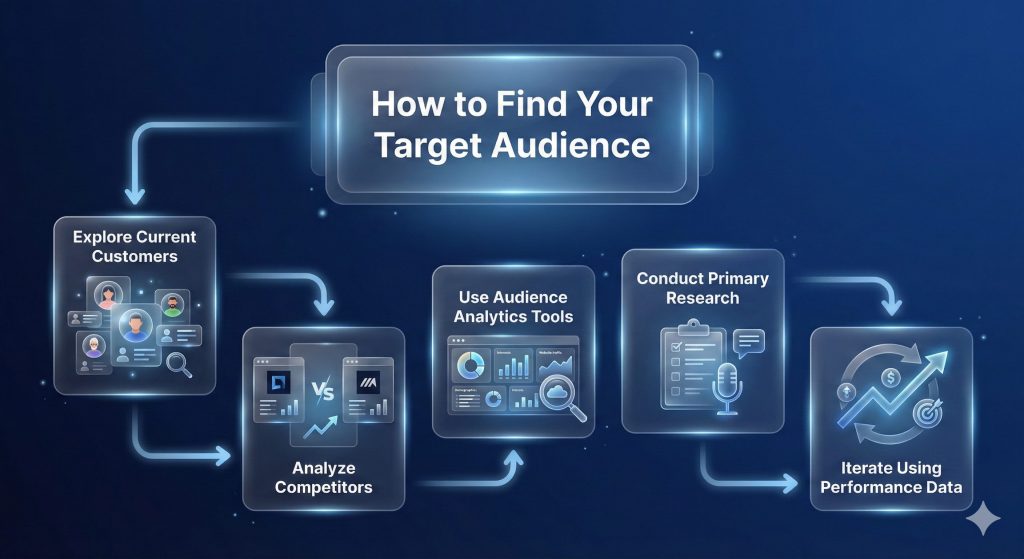
1. Explore Your Current Customers
If your business is already operating, look at who’s already engaging with or buying from you. What demographics do they share? What behaviors or purchase patterns show up regularly?
2. Analyze Your Competitors
Review competitors’ audiences to see who they’re successfully targeting. What gaps exist in the market that you can fill?
3. Use Audience Analytics Tools
Platforms like Google Analytics, social media insights, or CRM data give demographic and behavioral insight — helping you map age, location, interests, and more.
4. Conduct Primary Research
Surveys, interviews, and focus groups uncover motivations and needs that data alone can’t show. This qualitative research strengthens your audience profiles.
5. Iterate Using Performance Data
Audience targeting isn’t static. Regularly monitor campaign performance and adjust your audience definitions based on real engagement and conversion signals.
Target Audience Research
Target audience research is your investment in understanding who your audience is and why they behave as they do. It’s more than demographics — it’s a holistic insight into motivations, decision triggers, content preferences, and behavioral patterns.
Effective research combines:
- Primary research: Direct customer surveys, interviews, focus groups.
- Secondary research: Industry reports, competitor insights, market trend data.
- Behavioral data: Website analytics, social engagement metrics, where they click and when.
The goal? Build audience profiles or buyer personas that feel like real people — not abstract data points. These personas guide messaging, creative, channel selection, and campaign timing.
Demographics, Psychographics, and Behaviors: Breaking Down Audience Insights
To understand your audience at the level needed for meaningful targeting, you must use segmentation:
Demographics
This includes quantifiable traits like:
- Age
- Gender
- Income
- Education
- Location
Goal: provide foundational clarity on who your audience is.
Psychographics
digs deeper into why your audience behaves the way they do — including:
- Values and beliefs
- Attitudes
- Lifestyle preferences
- Interests
Goal: bring nuance to your audience and help tailor messages that resonate emotionally and psychologically.
Behaviors
insight focuses on actions, such as:
- Purchase history
- Platform usage
- Engagement patterns
- Buying trigger
Goal: allows you to tailor when and how you reach your audience — not just who they.
Target Market vs Target Audience
These terms are related but not interchangeable:
- A target market is the broader group you want your business to serve — think of it as everyone who could buy from you.
- A target audience is a specific segment within that market you’re targeting with particular messages or campaigns.
For example: A fitness brand’s target market might be all health-conscious adults. But a target audience could be Millennial women interested in home workout gear — a precise segment you’ll speak to in a specific campaign.
Why Identifying Your Target Audience Matters for Business Growth
Identifying your audience isn’t just theory — it directly impacts your:
1. Marketing Return-On-Investment (ROI)
When you know who to target, you spend less on audiences unlikely to convert and more on those who are already predisposed to your product or content.
2. Messaging Relevance
Audience targeting ensures your messaging feels personal and relevant — not generic — boosting engagement and conversions.
3. Competitive Advantage
Understanding audience nuances can uncover underserved segments your competitors are ignoring.
4. Stronger Customer Relationships
When your audience feels understood, loyalty and lifetime value increase.
Target Audience Examples
Let’s pull tangible examples from real brands to make this concrete:
Planet Fitness
Positioned as a “Judgment Free Zone,” Planet Fitness specifically targets people who experience gym intimidation and prefer a non-competitive, welcoming environment — a clear audience segment within the broader fitness market.
Aldi
Rather than competing with Whole Foods or Trader Joe’s on premium positioning, Aldi targets budget-conscious food shoppers who value cost savings and everyday grocery essentials — a distinct demographic and behavioral audience.
HelloFresh
HelloFresh tailors its messaging to young professionals and busy households who value convenience and affordability in meal preparation — showing how psychographics (lifestyle) align with product benefits.
These campaigns work because they align product, messaging, and channel strategy with the specific audiences most likely to respond positively.
Who is the Target Audience?
Depending on your business, the target audience could be (or a combination of):
- Consumers of a specific age range
- Professionals in a particular industry
- Buyers with distinct interests or purchasing behaviors
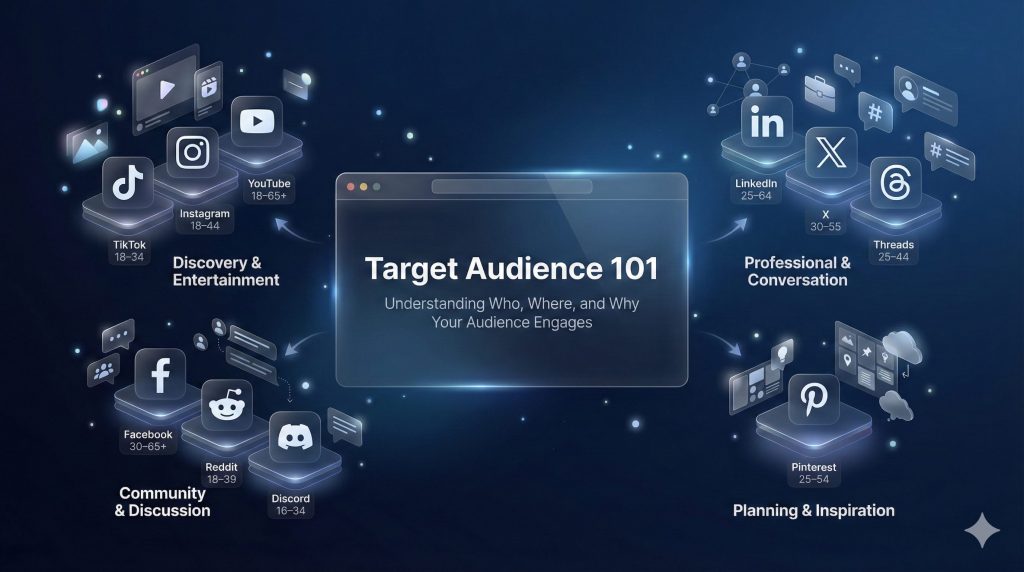
- Social media users aligned with certain platforms’ demographics
The key is defining characteristics your audience actually shares, not what you hope they share.
How to Find Your Target Audience on Social Media
Social media platforms offer powerful tools for discovering and engaging your ideal audience:
1. Use Built-In Analytics
Platforms like Facebook Insights, Instagram Analytics, and LinkedIn Analytics show:
- Follower demographics
- Engagement behaviors
- Peak activity times
Thus data reveals who your audience is on each platform
2. Monitor Platform Demographics
Knowing where your audience spends time is crucial. For example:
- TikTok has a strong Gen Z presence
- LinkedIn is professional and business-oritented
- Facebook tends toward older demographics
Different platforms require different targeting strategies.
3. Social Listening
Tools and hashtags allow you to see what your potential audience is talking about in real time — and where they engage most.
4. Paid Targeting Tools
Paid platforms like Facebook Ads Manager let you narrow audiences by age, interests, behaviors, and more — effectively finding and serving your audience where they are.
Common Mistakes to Avoid When Defining Your Target Audience
Even seasoned marketers can slip up. Here are pitfalls to avoid:
- Being Too Broad – “Everyone” is not a target audience. Broader targeting dilutes spend and weakens messaging impact.
- Ignoring Behavioral Data – Demographics alone don’t tell the whole story — behavior and intent matter just as much.
- Confusing Audience with Market – Your target market is large; your audience is precise. Blurring lines here leads to scattered campaigns.
- Not Updating Over Time – Audiences evolve — revisit your definitions based on fresh data and trends.
- Neglecting Platform Differences – Your social audience might look very different from your email list audience. Treat each channel’s insights on its own.
Conclusion
Mastering finding your target audience and audience targeting isn’t optional — it’s essential for marketing success. From defining who your ideal customers are, researching their motivations and behaviors, to tailoring messaging and channels that speak directly to them, a strategic approach to target audience analysis drives efficiency, relevance, and growth.
Whether you’re launching your first campaign or refining a mature strategy, start with the audience. Because when you know who you’re talking to — and why they care — everything else becomes clearer.