
Speed-to-Lead: Why 5 Minutes Wins
Speed-to-lead is the discipline of winning the countdown that starts the moment a prospect raises their hand. For service businesses, it is often the highest-leverage number in the funnel — and the one most teams never actually measure.


Every inbound lead arrives with a countdown already running. The moment someone submits a form or requests a quote, their intent is at its peak — and it begins decaying immediately. Speed-to-lead is the discipline of winning that countdown. For service businesses competing on responsiveness rather than price, it is often the highest-leverage number in the entire funnel, and the one most teams never actually measure.
What Speed-to-Lead Actually Measures
Speed-to-lead is the elapsed time between a prospect expressing interest and your first meaningful response — not an autoresponder, but a genuine attempt to engage a human conversation. It qualifies as a core sales and marketing KPI for one reason: it sits directly on the revenue path. Every minute of delay quietly erodes conversion on demand you already paid to generate.
The common misconception is that speed-to-lead is a call-center metric — a matter of reps dialing faster. It is not. It is a systems metric. A five-minute response is the output of detection, routing, notification, staffing, and tooling all firing in sequence. Treating it as a willpower problem — "the team just needs to hustle" — is precisely why most improvement efforts stall. You cannot coach your way out of a structural delay.
The Four Clocks of Speed-to-Lead
Most teams track a single number: lead created to first touch. That number is useful for benchmarking but useless for fixing anything, because it hides where the time actually goes. Break it into four clocks and the bottleneck becomes obvious.
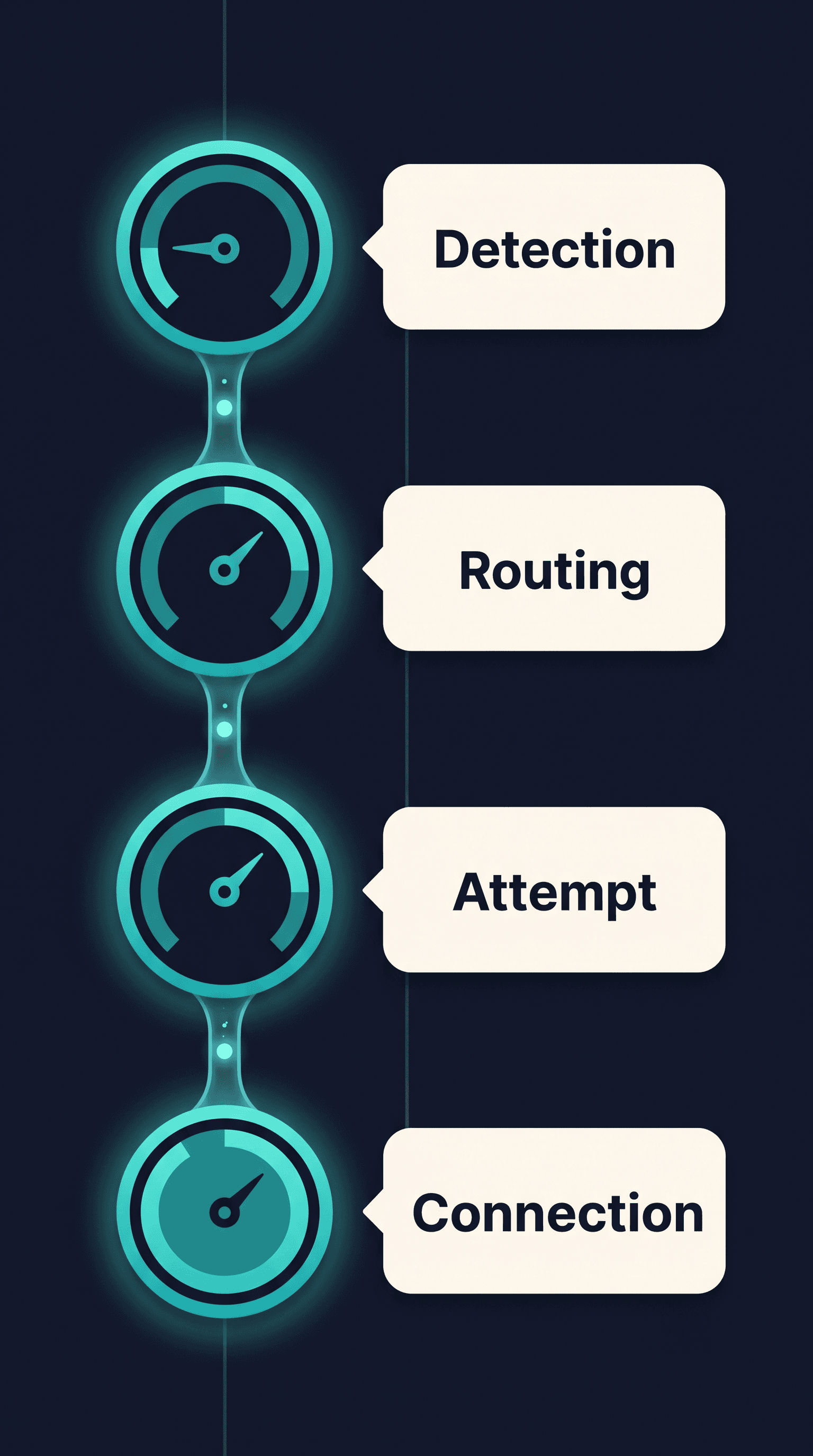
- Detection lag — from lead created to your system registering it. A form that takes ninety seconds to sync to your CRM has already burned a fifth of your five-minute window before anyone is even aware.
- Routing lag — from detected to assigned to the right owner. Manual assignment, round-robin queues, and territory lookups live here.
- Attempt lag — from assigned to first outreach attempt. This is where notifications, rep availability, and coverage gaps do their damage.
- Connection lag — from first attempt to a live conversation. Governed by channel choice, number of attempts, and timing.
The value of the model is diagnostic. When your speed-to-lead is poor, it is almost never poor everywhere — one clock is usually eating the budget. Optimizing the wrong one is the most common waste in this work. A team that hires more reps to fix what is actually a detection problem spends money and moves nothing.
Why the First Five Minutes Matter
The urgency is not arbitrary. Research popularized by Harvard Business Review found that firms attempting contact within an hour were several times more likely to reach a qualified decision-maker than those that waited even sixty minutes longer — and dramatically more likely than those who let a day pass. The finding that reshaped the field is what happens inside that first hour.
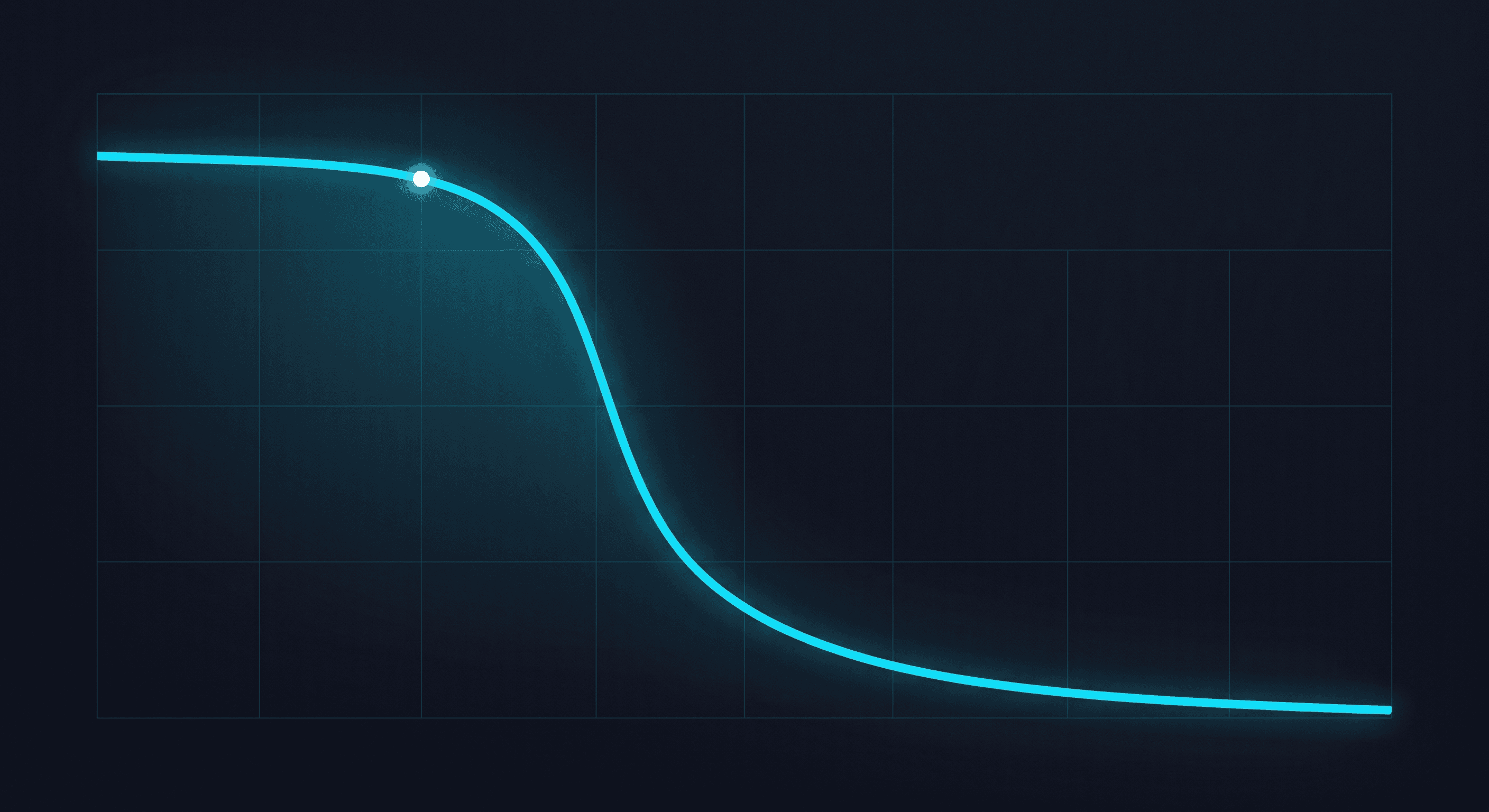
Widely cited lead-response research places the real cliff at around five minutes. The odds of qualifying a lead drop by roughly an order of magnitude between a five-minute and a thirty-minute response, and the contact rate itself collapses as the minutes accumulate. A useful way to read the speed to lead statistics is not "faster is better" in the abstract, but that response time is non-linear: the first five minutes are worth more than the next fifty combined.
The mechanism is human. Intent is highest at the moment of submission, attention is already on the problem, and the prospect has usually contacted more than one provider. Speed does not just improve your odds — it decides who gets to frame the conversation before a competitor does.
How Speed-to-Lead Drives Revenue
The revenue effect compounds through a simple chain: faster response raises contact rate, higher contact rate produces more qualified conversations, and more conversations create more pipeline from the same lead volume. Nothing upstream changes. You are not buying more traffic or running more campaigns — you are recovering conversion you were already losing to the clock.
This is what makes speed-to-lead unusually attractive economically. Most conversion levers cost money to pull: more spend, more creative, more offers. Compressing response time raises the yield on demand you have already acquired, which means it improves margin, not just volume. In competitive service categories, a team winning on speed to lead sales execution can outperform a rival with a larger ad budget, simply by converting a higher share of identical inbound intent.
Optimal Response Times: B2B vs. B2C
Speed matters everywhere, but the target and the reason differ by motion.

Optimal lead response time for B2B sales
For B2B, the working standard is minutes, not hours — ideally under five. The buying process is longer and more considered, which leads many teams to assume a slower response is acceptable. The opposite is true. Because B2B deals are high-value and involve multiple stakeholders, the first vendor to reach a decision-maker often sets the evaluation criteria the rest of the field is then measured against. Slow response does not just lose the occasional deal; it structurally cedes the framing advantage on every deal.
Optimal lead response time for B2C sales
For B2C, the window is tighter still — seconds to a few minutes. Consumer intent is more emotional and more impulsive, and it decays fastest. A prospect comparing three local providers will frequently transact with whoever answers first, before the others have registered the lead. Here, speed routinely beats brand: reputation opens the door, but response time closes it.
Why Teams Respond Too Slowly
Map the usual culprits to the four clocks and the fixes stop being guesswork.
- Disconnected systems inflate detection lag. Leads sit in a form tool, an ad platform, or an inbox before reaching the CRM.
- Manual routing inflates routing lag. Every hop that depends on a person noticing and forwarding adds minutes and introduces business-hours gaps.
- Delayed or buried notifications inflate attempt lag. If the alert is an email in a crowded inbox, the five-minute window is gone before it is seen.
- Understaffing and coverage gaps also inflate attempt lag, especially at nights, weekends, and lunch — when a meaningful share of inbound arrives.
- No SLA or clear ownership removes accountability across all four clocks. When response time is nobody's explicit number, it drifts.
The pattern underneath these is that speed-to-lead fails silently. No single lead announces that it was lost to a slow response; it simply never converts, and the cost hides inside an acceptable-looking aggregate.
Best Practices to Compress Response Time
Each best practice targets a specific clock. Sequence them by where your time is actually going, not by which is easiest to buy.
- Automated lead routing attacks routing lag — instant, rule-based assignment by territory, product, or value, with no human in the relay.
- Instant, unavoidable notifications attack attempt lag — push, SMS, or a dedicated channel that interrupts, rather than an email that waits to be noticed.
- Response-time SLAs with named ownership attack accountability — a documented target (for example, first attempt within five minutes) tied to a specific owner and reported on.
- AI chat and automated qualification attack connection lag — engaging the prospect the instant they arrive and holding attention until a rep is live.
- Call queues and coverage design attack attempt lag at the edges — ensuring the window is covered outside core hours.
- CRM workflows attack detection lag — closing the gap between capture and awareness so the other fixes have time to work.
The Speed-to-Lead Audit
Before buying anything, run this checklist:
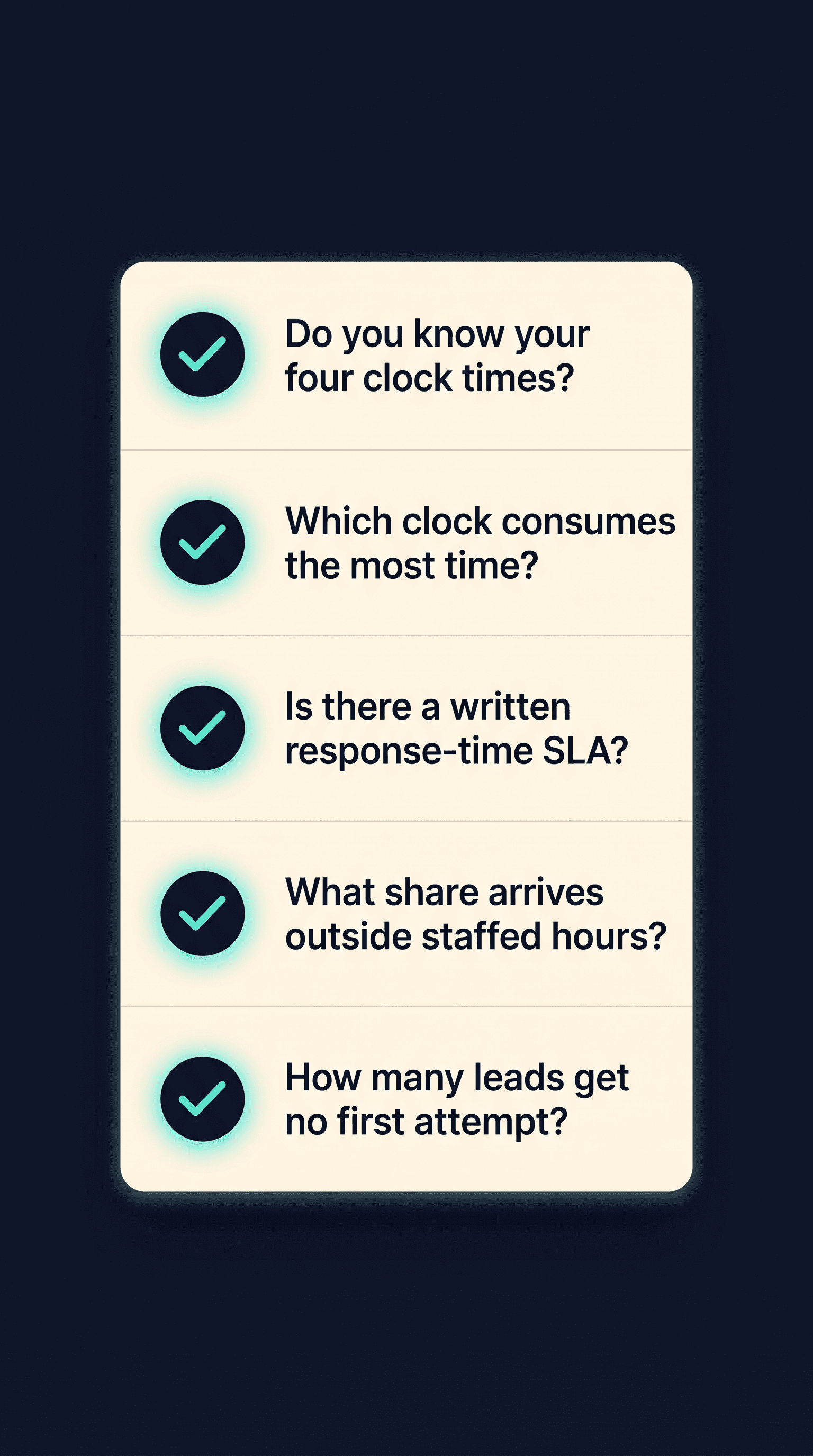
- Can you state your four clock times today, in numbers?
- Which single clock consumes the most time?
- Is there a written response-time SLA, and does one person own it?
- What percentage of inbound arrives outside staffed hours?
- How many leads never receive a first attempt at all?
If you cannot answer the first question, that is the finding — you are managing a number you do not see.
How to Measure and Track Speed-to-Lead
Start with a clean definition: average response time is the mean elapsed time from lead creation to first genuine outreach attempt, measured across a defined period. Two refinements make it trustworthy. Use the median alongside the mean, because a handful of ignored leads will distort an average and flatter you. And measure each of the four clocks separately, so the metric points to a fix rather than just a verdict.
Beyond response time itself, track contact rate (share of leads that reach a live conversation) and speed-to-qualify (time to a qualified opportunity). Build these into a dashboard reviewed on the same cadence as pipeline, and benchmark against your own trend first — improvement against last month is more actionable than a generic industry figure. The reliable pattern across speed to lead statistics is that teams which report on response time weekly improve it, and teams that do not, do not.
Choosing Tools That Help You Respond Faster
Tool selection is where most speed-to-lead initiatives overspend. The market for speed to lead services and software is crowded — CRM automation, lead distribution platforms, conversational AI, and integration layers all promise faster response. The discipline is to buy against a diagnosed clock, not a feature list.
- If detection is the bottleneck, prioritize integrations that eliminate the gap between capture and CRM.
- If routing is the bottleneck, a lead distribution tool earns its cost.
- If attempts are the bottleneck, invest in notification and coverage tooling before anything else.
- If connection is the bottleneck, conversational AI that engages instantly is the highest-leverage buy.
The mistake to avoid is purchasing a platform before measuring, then reshaping your process around the tool's assumptions. Tools compress clocks; they do not tell you which clock is broken. Measurement comes first, and it is nearly free.
Speed-to-lead rewards the same thing repeatedly: treating response time as a system you instrument and manage, not a habit you hope your team maintains. The businesses that win the countdown are rarely the ones working hardest at the moment of contact. They are the ones who removed the delay long before the lead ever arrived.
- Speed to Lead
- Lead Response Time
- Sales and Marketing
- Marketing Automation
- Conversion Rate Optimization
- Lead Generation