


Paid media refers to advertising efforts where you pay to promote your brand or content to a targeted audience. It can be a game-changer for businesses of all sizes, including small and mid-sized companies and startups. In this comprehensive guide, we’ll cover everything you need to know about paid media – from what it is and why it’s important, to the various channels available, how to craft an effective strategy, ways to target the right audience, and how to measure success.
What is Paid Media?
“Paid media” means any marketing channel where you pay to place your message in front of an audience. Common examples include online ads on search engines or social media platforms. This is distinct from owned media, which refers to channels you control (like your website, blog, or email list), and earned media, which is publicity others give you for free (like customer reviews, press mentions, or social media shares).
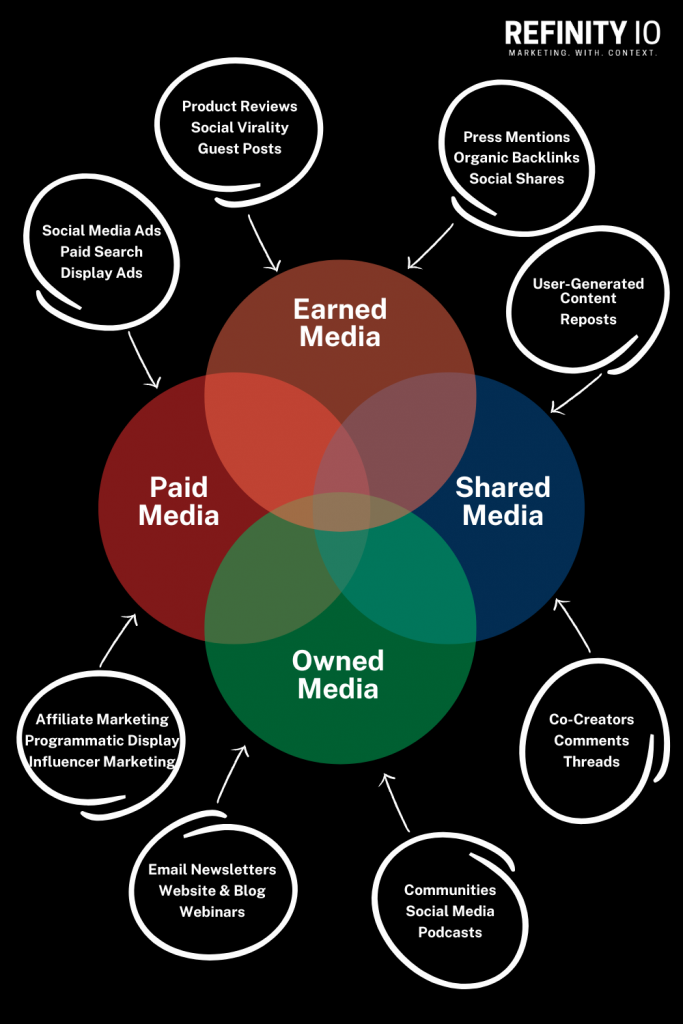
The key difference is control and cost: with paid media you have to pay for placement but gain control over targeting and timing, whereas owned media costs your time/resources to manage, and earned media is free but cannot be directly controlled.
A Brief History
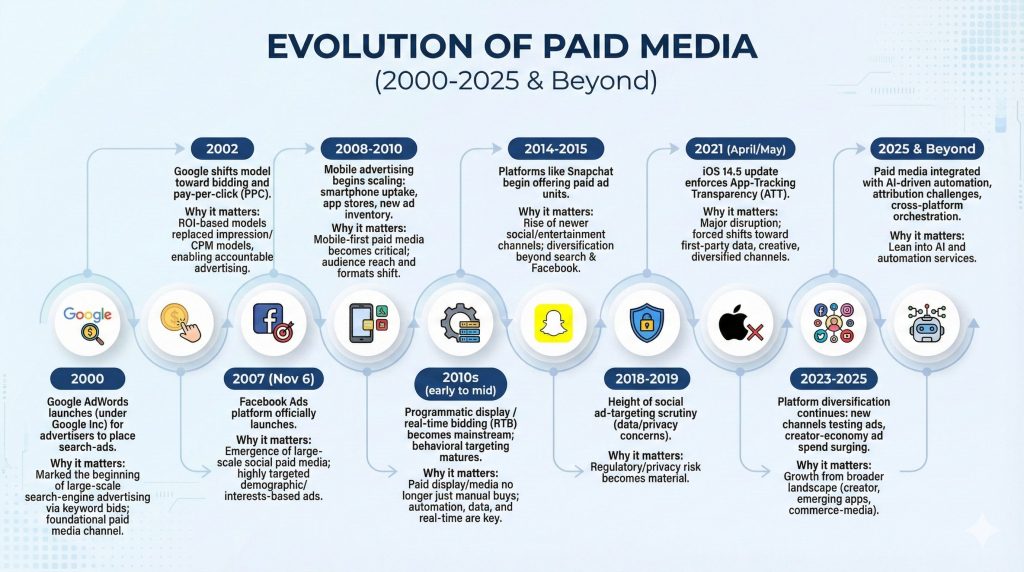
Advertising, at its core, has existed for centuries—long before the internet or even mass media. Early forms appeared as town criers, printed flyers, and newspaper ads in the 18th and 19th centuries, all designed to influence buying behavior at scale. The modern advertising era took shape in the mid-20th century, led by pioneers like David Ogilvy, who emphasized research, clear positioning, and persuasive storytelling—principles that still underpin effective paid media today. As television, radio, and print matured, advertising became increasingly data-driven, segmented, and performance-oriented. By the late 1990s, the rise of the internet began reshaping how brands reached audiences, setting the stage for the digital advertising revolution that would unfold rapidly from the early 2000s onward.
As technology advanced, advertising followed. The early 2000s marked a fundamental shift from traditional, broad-reach advertising to measurable, performance-driven digital channels. Search engines, social platforms, and programmatic systems transformed how brands target, track, and optimize paid media—ushering in an era where data, automation, and intent became central to advertising success. The timeline below highlights the key milestones that shaped modern paid media from 2000 through today.
Types of Paid Media
Examples of major paid media channels:
- Paid Search – a search engine results page showing SEM/PPC text ads marked as “Ad”; a social media ad (Sponsored post on Facebook/Instagram feed).
- Paid Social – a social media ad (Sponsored post on Facebook/Instagram feed).
- Programmatic / Display – a display ad banner on a website; native advertising in the form of a sponsored article.
- Influencer Marketing – an influencer marketing post where a creator promotes a product.
- Affiliate Marketing – a link/promo with unique tracking code tied to traffic source promoted through other channels.
- Video Advertising – spanning from short social clips to full TV-style commercials on streaming platforms.
Search Engine Marketing (Paid Search)
One of the most popular forms of paid media is search engine marketing (SEM), also referred to as search engine advertising, pay-per-click, or paid search. This includes platforms like Google Ads and Microsoft (Bing) Ads. The concept is straightforward: you bid on specific keywords so that your ad can appear when someone searches for those terms. These ads typically show up at the top or bottom of search results pages, labeled as “Ad” or “Sponsored” resultsbusiness.adobe.com. You pay only when someone clicks on your ad (hence pay-per-click).

For example, a bakery in Chicago might bid on the keyword “best cupcakes in Chicago.” When a user searches that phrase, the bakery’s paid ad could appear above the organic search results, leading the user to the bakery’s website. Because the user is actively searching for that product or service, search ads often connect with high-intent prospects who are further along in the buying process.
How it works: Advertisers create text ads with a headline, description, and URL, and choose keywords relevant to their business. Through an auction system, search engines decide whose ads show for a given search query, based on bid amount and quality factors. A well-structured search campaign involves creating focused ad groups for sets of related keywords and writing ads highly relevant to those keywords (to improve quality score and ad rank).
Social Media Advertising (Paid Social)
Most social media platforms allow you to place paid messages (image, video, carousel), this is called social media advertising, or paid social. Platforms like Meta (Facebook and Instagram), X (formerly Twitter), LinkedIn, TikTok, Pinterest, and others offer advertising on the backend of their organic content distribution.
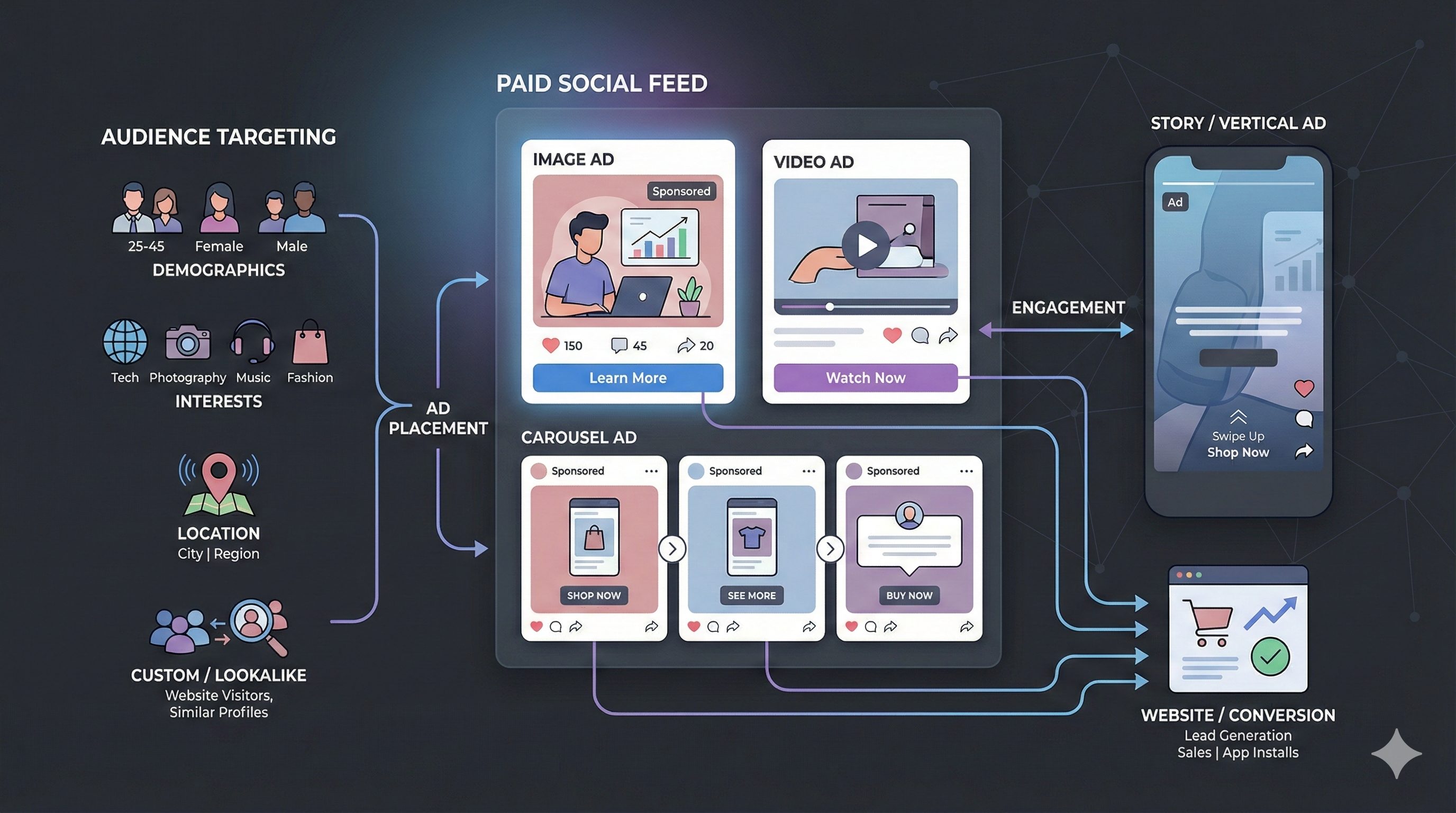
- Facebook/Instagram (Meta Ads): By far one of the most widely used platforms for paid social. You can create image ads, video ads, carousel ads (multiple images/videos in one ad), story ads (vertical fullscreen ads between Stories), and more. Meta’s targeting is extremely granular – you can target based on demographics, interests, behaviors, life events, custom audiences (like your customer list or website visitors), lookalike audiences, etc.
- TikTok Ads: TikTok’s ad platform is newer but huge for reaching younger audiences (Gen Z and millennials). Formats include in-feed video ads (up to 60s, that users can scroll past like any TikTok), branded hashtag challenges (encouraging user-generated content around a theme), and branded effects/filters. TikTok targeting includes age, interests, behaviors (like what categories of videos users engage with). Content on TikTok must be very engaging very fast – think vibrant, fun, and looking native to TikTok (vertical video, music, captions).
- LinkedIn Ads: LinkedIn is ideal for B2B marketing or reaching professional audiences. Ad formats include sponsored content (appears in the feed), sponsored InMail (messages delivered to inbox), text ads, and dynamic ads that can personalize with the viewer’s info (like “Work at {Company}? Check this out!”). LinkedIn allows targeting by company size, industry, job title, job function, skills, etc.
- Twitter (X) Ads: Twitter offers promoted tweets and trends. It’s good for quick updates, promotions, or engaging in trending conversations. Targeting can be by interests, follower look-alikes (target people similar to followers of an account), or keywords (tweets people have interacted with). For example, a gaming company might target users who follow popular gaming accounts or who tweet about certain game genres.
- Pinterest Ads: Pinterest is a visual discovery platform, great for products or content in niches like home decor, fashion, DIY, food, and travel. Promoted Pins look like regular pins but reach a wider audience. You can target by interests, keywords (what people are searching for on Pinterest), and also by demographics.
Programmatic / Display Advertising
Display advertising refers to visual ads (banner ads, images, or rich media) shown on websites across the internet. Common examples include banners you see on news sites, blogs, or forums. Traditionally, you could buy ad placements on specific websites (direct buys), but today much of display is done via programmatic advertising – an automated bidding process that matches ads with available website ad slots in real-time.
Influencer Marketing (Sponsored Content)
Influencer marketing involves collaborating with individuals who have a following and influence over a target audience. For example, a beauty brand might pay a makeup YouTuber or an Instagram beauty guru to feature or review their products. Influencers can range from mega-celebrities to micro-influencers with a few thousand highly engaged followers. The appeal is that the promotion feels more like a personal recommendation than a traditional ad, leveraging the credibility and rapport the influencer has with their audience.
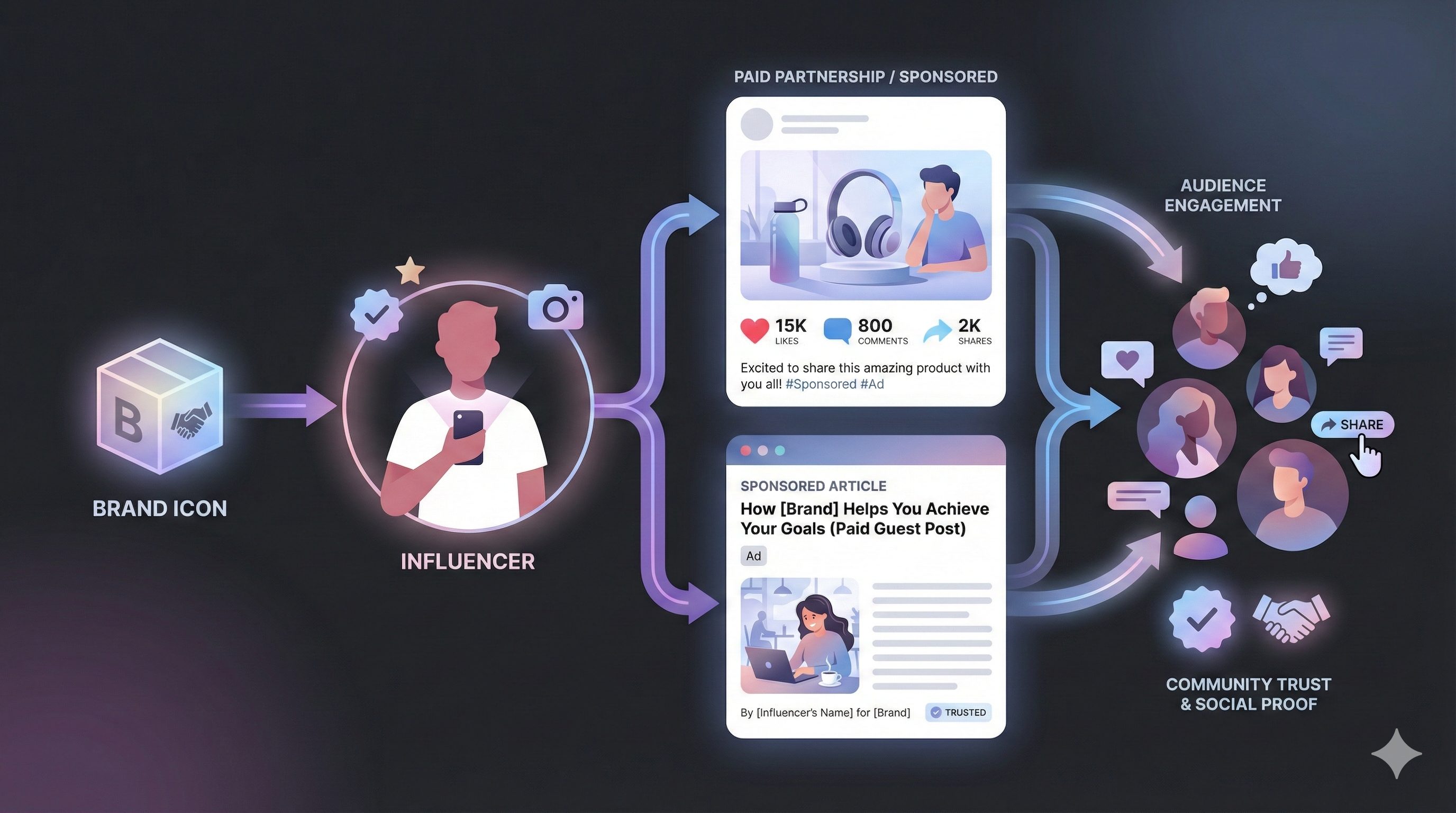
Influencer partnerships can take many forms:
- A dedicated post or video reviewing or demonstrating the product.
- A simple shout-out or mention.
- A long-term ambassadorship where the influencer represents the brand over time.
- Co-created products or content (like an influencer “takeover” of a brand’s social account for a day).
One big advantage here is social proof – fans of the influencer see someone they trust using the product, which can strongly sway their opinions. Influencer content also often yields user-generated content in response (comments, shares, etc.), increasing engagement around your brand.
Sponsored content (or native advertising) is slightly different: it usually refers to paying a publisher or platform to create or host content that features your brand, blending in with the editorial style of that platform. Examples:
- An online magazine publishes an article titled “10 Tips for Better Sleep” which is actually sponsored by a mattress company and subtly highlights that company’s mattress in the tips.
- A popular blog runs a “guest post” that’s actually paid for by a brand and mentions the brand.
- Platforms like BuzzFeed have done sponsored quizzes or listicles (e.g., “Find Your Perfect Vacation Spot” sponsored by an airline).
The idea is the content itself is valuable or entertaining, and it markets the product more softly. The benefit of sponsored content is that readers might not skip it the way they skip obvious ads, especially if it’s genuinely useful or interesting.
Video Advertising
YouTube Ads: YouTube (owned by Google) is the second largest search engine and a huge platform for video ads. Formats include:
- Skippable in-stream ads (TrueView ads) that play before or during a video. Viewers can skip after 5 seconds. Advertisers are usually charged only if the viewer watches 30 seconds (or the whole ad, if shorter) or interacts with the ad. This format is great because you don’t pay for uninterested viewers (if they skip quickly). However, you need to hook viewers in those first 5 seconds to encourage them to keep watching.
- Non-skippable in-stream ads (15 seconds or less, viewer must watch). These are typically used for broader awareness campaigns.
- Bumper ads, which are non-skippable 6-second videos. They are bite-sized ads good for quick brand impressions.
- Discovery ads (video ads that show up in YouTube search results or as suggested videos).
- Masthead ads (premium placement on the homepage – very expensive, usually for big launches).
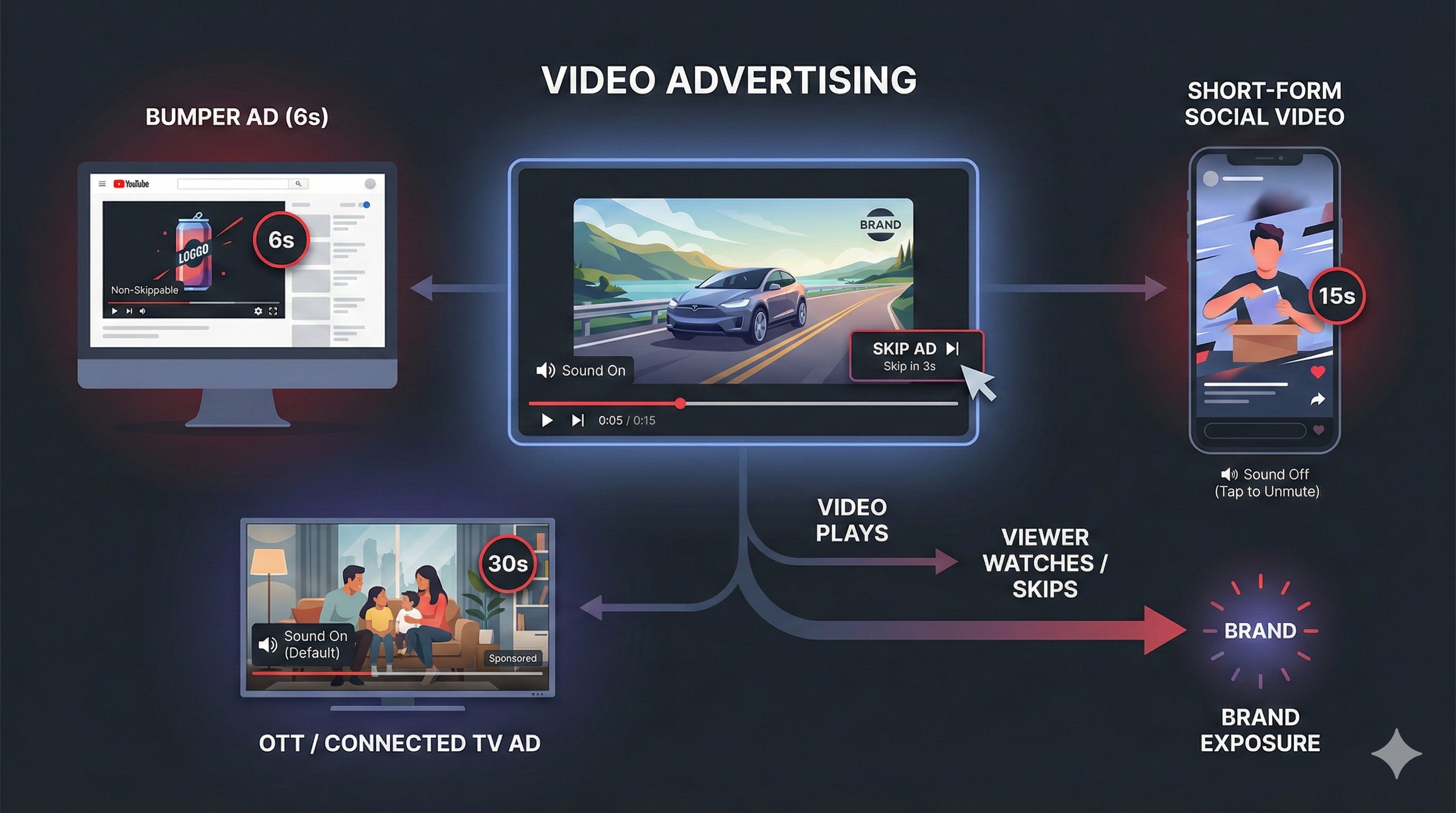
TikTok Ads is all about short-form vertical video. TikTok needs to feel native and fast-paced. They often benefit from using trending music or challenges and must deliver the message quickly (TikTok users scroll very fast if not immediately interested). Humor, visual effects, and clear text overlays (since many watch without sound initially) can help.
OTT (Over-The-Top) and Connected TV Ads: These are essentially digital TV commercials delivered through internet streaming services and devices. If you watch streaming TV with ads (like Hulu with ads, Peacock, or even YouTube on a smart TV), those commercials are OTT ads. Historically, TV advertising was out of reach for small companies due to cost and targeting limits. OTT has changed that by allowing more granular purchasing.
Crafting a Paid Media Strategy
Jumping into paid advertising without a plan can lead to wasted budget. A sound strategy ensures that every dollar spent is working toward your business goals. Let’s break down how to craft a paid media strategy step by step:
Setting Goals and KPIs for Paid Media Campaigns
Start with clear goals. Ask yourself: What do I want to achieve with my paid media campaign? Your goals might be:
- Increasing website traffic (e.g., “Get 5,000 new visitors to the site this month”).
- Generating leads (e.g., “Collect 200 webinar sign-ups”).
- Bumper ads, which are non-skippable 6-second videos. They are bite-sized ads good for quick brand impressions.
- Driving sales (e.g., “Achieve $50,000 in online sales this quarter”).
- Boosting brand awareness (e.g., “Reach 100,000 people in our target audience with our new video ad”).
Make sure your goals are SMART: Specific, Measurable, Achievable, Relevant, Time-bound. For example, instead of a vague goal like “increase sales,” a SMART goal would be “Increase online sales by 20% in Q4 while maintaining a cost-per-acquisition under $20.” This way, you have a concrete target and a metric to watch (sales and CPA in this case).
Once goals are set, determine the Key Performance Indicators (KPIs) that align with those goals:
- If your goal is traffic, KPIs could be number of clicks, click-through rate (CTR), and cost per click (CPC).
- For lead generation, KPIs might include cost per lead (CPL), conversion rate (visitor-to-lead), and total leads.
- For sales, you’d track conversions (purchases), cost per acquisition (CPA)business.adobe.com, and return on ad spend (ROAS)
- For brand awareness, you might look at impressions, reach (number of unique people who saw the ad), video views (if using video), or lift in branded search volume.
Setting these targets up front is crucial. It not only guides your campaign setup (different goals might mean using different campaign types or optimization settings in the ad platforms), but it also tells you what success looks like so you can gauge performance.
Conversion Tracking
Conversion tracking is the backbone of measuring ROI in paid media. Without it, you’re flying blind – you won’t know which ads or keywords are actually driving results. Setting it up properly should be one of the first tasks when launching campaigns.
General steps to set up conversion tracking:
- Define what a conversion is for you: It could be a completed purchase, a lead form submission, a phone call, a button click, etc. Sometimes there are micro-conversions too (like add to cart, newsletter signup) that you track in addition to the main goal. Start with your primary goal.
- Choose your tracking method(s):
– Platform-specific tracking: Each ad platform usually has its own pixel or tag. For example, Google Ads uses the Google Ads Conversion Tag (often set up via Google Tag Manager or directly on site), and Facebook uses the Facebook Pixel (now part of the Meta Pixel). LinkedIn has an Insight Tag, Twitter has a Universal Website Tag, etc. You typically place these on your site and configure events.
– Analytics-based tracking: Google Analytics can track goals (like a destination page view or event) and if you link Google Analytics with Google Ads, you can import those goals as conversions into Google Ads. Similarly, some people use analytics to judge Facebook performance by looking at traffic behavior. However, for optimizing within the ad platform, it’s best to use the platform’s native tracking, as that feeds the algorithm real-time data to optimize your campaigns for conversions.
– Call tracking: If phone calls count as conversions (common for local services), you might use a call tracking service or Google’s call forwarding numbers (for calls from ads or website).
– Offline conversions: If your conversions happen offline (like sales calls closing deals), you can still track them by uploading data back into the platform (e.g., Google’s Offline Conversion Import or Facebook’s Offline Events). This is more advanced but possible, so that you can attribute which ad click eventually led to an offline sale. - Implement the tracking code: For web conversions, this usually means adding a piece of JavaScript code to your website. Often it’s placed on the specific “thank you” or confirmation page that only appears after a successful conversion. For example, after someone completes a purchase, they land on an order confirmation page. You’d put the conversion tracking code on that page so it fires when loaded, signaling a conversion. Many platforms now allow event-based tracking too (like firing the pixel when a button is clicked or form submitted via event listeners).
- Configure the conversion in the platform: For Google, you’d go in Google Ads > Tools > Conversions and create a new conversion action (specify type: webpage, app, phone, import, etc.). It will give you instructions or code (if using GTM, you configure tag with conversion ID/label). For Facebook, in Events Manager, you set up custom conversions (optionally) based on events or URLs, or just use standard events. LinkedIn, Twitter, etc., similarly have dashboards to define what constitutes a conversion.
- Test the tracking: It’s critical to ensure it works. Do a test conversion: click on your ad (you can use preview mode or just lower budgets and search for it), complete the action on your site, then check if the conversion registers. Many platforms have diagnostics
Why conversion tracking is vital: Without it, you might optimize for the wrong thing (like clicks) and have no idea if those clicks turned into sales or leads. With it, you can see metrics like cost per conversion, conversion rate per ad/keyword/audience, and you can make data-driven decisions – e.g., pause keywords that spend a lot but never convert, increase budget on ad sets that have great CPA, use automated bidding (Target CPA or Target ROAS in Google) which relies on conversion data.
Paid media can indeed drive spectacular results, especially when you approach it strategically: choosing the right channels, crafting strong targeted messages, and continuously learning from the data to refine your approach. Now, armed with knowledge, go forth and execute your paid media campaigns with confidence! Monitor those results, stay agile, and you’ll find the paid media mix that propels your brand growth and delivers a healthy return on your investment — Happy advertising!